Category: Sports

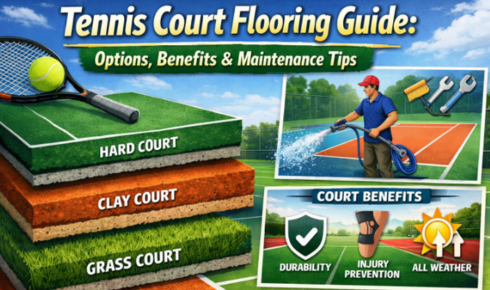
  • Tennis Court Flooring Guide: Options, Benefits & Maintenance Tips

    Tennis Court Flooring Guide: Options, Benefits & Maintenance Tips

    Choosing the right tennis court flooring is one of the most important decisions in tennis court construction and renovation. The surface of a tennis court directly affects ball bounce, player movement, safety, maintenance cost, and the overall playing experience. Whether the court is designed for a school, sports academy, residential society, or professional facility, the flooring system determines how well the court performs over time.

    With advancements in surface technology, modern tennis court flooring materials offer far better durability, consistency, and ease of maintenance compared to traditional courts

    What Is Tennis Court Flooring?

    Tennis court flooring refers to the complete surface system applied over a prepared base to create a playable court. It is not just a topcoat or paint layer but a multi-layer system designed to support movement, ball response, and long-term durability.

    A standard tennis court flooring system includes base preparation, leveling layers, surface coatings, texture layers for grip, and line markings. Each layer contributes to the court’s performance, making flooring selection a technical decision rather than a purely aesthetic one.

    Why Tennis Court Flooring Matters

    The quality of tennis court flooring has a direct impact on how the game is played. Inconsistent surfaces lead to unpredictable bounce and increased risk of injury. Poor drainage or surface cracks can make courts unplayable for long periods.

    High-quality tennis court flooring ensures consistent playing conditions, reduces strain on players’ joints, and allows year-round use with minimal interruptions. This is especially important for facilities with frequent daily usage.

    Evolution of Tennis Court Flooring Materials

    Historically, tennis was played on natural surfaces such as grass and clay. While these surfaces offer unique playing characteristics, they require intensive maintenance and are highly dependent on weather conditions.

    As tennis infrastructure expanded globally, the need for low-maintenance, all-weather solutions led to the development of synthetic tennis court flooring materials. Today, synthetic systems dominate new installations because they combine performance reliability with cost efficiency.

    Popular Tennis Court Flooring Materials Used Today

    Modern tennis courts rely primarily on synthetic materials designed to meet international playing standards.

    Synthetic Acrylic Tennis Court Flooring

    Synthetic acrylic is the most widely used tennis court flooring material. It consists of multiple acrylic coating layers applied over a concrete or asphalt base. The surface provides controlled speed, consistent ball bounce, and excellent traction.

    Acrylic tennis court flooring is suitable for outdoor and semi-covered courts and performs well in varying climatic conditions. Its low maintenance requirement makes it ideal for schools, clubs, academies, and residential complexes.

    Cushioned Acrylic Tennis Court Flooring

    Cushioned systems include elastic layers beneath the acrylic surface to improve shock absorption. These layers reduce stress on players’ knees and ankles, making the court more comfortable for extended play.

    Cushioned tennis court flooring materials are commonly used in training academies and high-usage facilities where player safety and comfort are priorities.

    Clay-Style Synthetic Tennis Flooring

    Clay-style synthetic flooring replicates the slower pace and higher bounce of traditional clay courts without the daily maintenance. These surfaces are used primarily in training environments focused on endurance and rally-based play.

    Although less common than acrylic systems, they remain a viable option for specialized tennis facilities.

    Indoor vs Outdoor Tennis Court Flooring

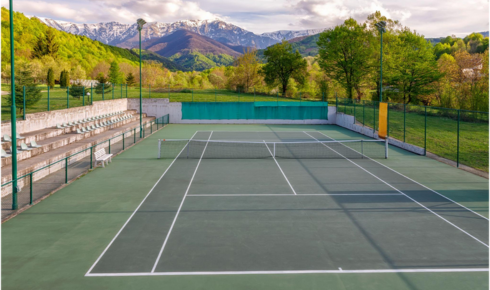
    Outdoor tennis court flooring must withstand sunlight, rain, and temperature fluctuations. Synthetic acrylic tennis court flooring materials are designed with UV-resistant pigments and weather-resistant binders to handle outdoor exposure.

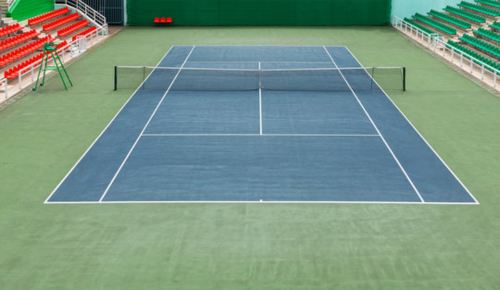
    Indoor tennis court flooring focuses more on grip consistency, cushioning, and visual clarity. Since weather exposure is limited indoors, surface texture and speed can be customized based on playing requirements.

    Selecting the right flooring depends on whether the court is fully outdoor, indoor, or semi-covered.

    Tennis Court Flooring Construction Process

    The performance of tennis court flooring depends heavily on proper construction practices. The process begins with site inspection and base preparation, usually concrete with the correct slope for drainage. Surface leveling and crack treatment ensure a smooth foundation.

    Primer coats are applied to improve bonding between layers. Acrylic resurfacer coats build texture and durability, followed by color coats that define the playing area. Accurate line markings complete the court according to standard dimensions.

    Each step plays a crucial role in the longevity and performance of the flooring system.

    Benefits of Modern Tennis Court Flooring

    Modern tennis court flooring materials offer several advantages over traditional surfaces. They provide consistent playability across seasons, require minimal daily maintenance, and offer better control over surface speed and grip.

    Synthetic systems also reduce downtime caused by weather and allow facilities to operate more efficiently. Over the long term, these benefits translate into lower operational costs and better user satisfaction.

    Maintenance Tips for Tennis Court Flooring

    One of the key reasons synthetic tennis court flooring is widely adopted is its ease of maintenance. Regular cleaning helps remove dust, leaves, and debris that may affect grip. Periodic inspections allow early detection of surface wear or minor cracks.

    Unlike clay or grass courts, synthetic tennis court flooring does not require watering, rolling, or frequent resurfacing. After several years of use, recoating the surface restores performance and appearance without rebuilding the court.

    Proper maintenance ensures the flooring system continues to perform as intended throughout its lifespan.

    Choosing the Right Tennis Court Flooring Material

    Selecting the right tennis court flooring material depends on usage intensity, player profile, climate conditions, and budget. Facilities with heavy daily use benefit from durable acrylic systems, while training centers may prioritize cushioned surfaces for injury prevention.

    Rather than focusing only on installation cost, it is important to consider long-term performance and maintenance requirements. The right flooring choice delivers better value over time.

    Common Mistakes to Avoid in Tennis Court Flooring Selection

    Choosing flooring based solely on appearance or short-term cost often leads to performance issues. Inadequate base preparation, improper slope, or low-quality materials can result in cracks, water pooling, and uneven bounce.

    Working with experienced professionals and using proven tennis court flooring materials helps avoid these issues and ensures consistent performance.

    Future Trends in Tennis Court Flooring

    The future of tennis court flooring lies in improved sustainability, enhanced cushioning technologies, and surfaces designed for player safety. Manufacturers are increasingly focusing on eco-friendly materials and systems that offer better shock absorption without compromising playability.

    As tennis continues to grow at grassroots and professional levels, demand for reliable, low-maintenance flooring solutions will continue to rise.

    Final Thoughts

    A well-designed tennis court flooring system is the foundation of a high-quality playing experience. The right tennis court flooring materials ensure consistent ball bounce, player safety, and long-term durability.

    Modern synthetic flooring systems offer the perfect balance between performance and maintenance, making them the preferred choice for most tennis facilities today. Investing in the right flooring solution ensures that the court remains playable, safe, and visually appealing for years to come.

    Title: Tennis Court Flooring Guide: Options, Benefits & Maintenance Tips

    Description: Complete tennis court flooring guide covering tennis court flooring materials, surface options, performance benefits, and maintenance tips for long-lasting courts.


  • How Agile Team Coaches Create Lasting Impact?

    How Agile Team Coaches Create Lasting Impact?

    The success of Agile transformations often depend not on the frameworks themselves, but on the skilled professionals who guide teams through meaningful change. The core success of Agile transformations is an essential position called as  Agile team coach. These experts don’t only make changes, but they also create lasting impact that changes teams, culture and whole organizations. For many professionals, especially those considering SSM certification to enhance their Agile journey, understanding the role of an Agile coach, highlights how such certifications support both individual growth and organizational transformation.

    What does an agile coach offer to teams for improvement?

    The agile coach provides teams more than just guidance on processes. They give the perspective, encouragement, and the structure required for sustainable improvement. Through blending mentorship, facilitation, and systems-thinking coaches assist teams in identifying their individual strengths, solve common issues and develop strategies that are ongoing. They are there to assist teams in developing processes that are in line with their mission and goals. Below are some examples of efficient and powerful Agile Team creating process:

    Building Self-Organizing Teams

    The biggest impact Agile coaches make is the development of teams that function as a team and adjust to the changing environment. Instead of creating dependence, effective coaches are focused on building internal capabilities. They help teams navigate the shift from traditional command-and-control structures to self-organizing units which are in charge of their own work and take decisions.

    Maintaining Continuous Learning Culture

    The impact of agile coaches lasts through creating a culture of constant learning and adapting. They implement practices such as recalls, experiments and sharing knowledge which have become part of the team. The shift in culture makes sure that teams do not just adhere to Agile methods mechanically, but they know the principles behind them and adapt to changing situations.

    Developing Internal Champions

    Strategic Agile coaches find and create internal champions within organizations. They are the ones who maintain Agile concepts and methods by spreading the knowledge and influencing within the organization. In the process of developing the champions, coaches establish an alliance of individuals who are able to sustain and grow Agile adoption long after the external coaching stops.

    Implementing Measurable Practices

    Long-lasting impact demands measurable outcomes. Effective coaches in Agile establish the metrics and feedback loops to assist teams to track their progress and prove the value of their work to all people who have an interest. They implement practices such as burning down charts, velocity tracking & customer satisfaction metrics which provide tangible evidence that there is improvement.

    Addressing Systemic Impediments

    Many coaches are focused on improvements at the team level, coaches who have a lasting effect tackle organizational obstacles that hinder Agile achievement. They collaborate with leaders to find and eliminate the structural obstacles, increase team collaboration, cross-team coordination, and ensure that policies are aligned to Agile practices.

    Facilitating Mindset Transformation

    The most significant impact the agile coaches have is a profound shift in the way they think. Coaches help teams and individuals shift from a rigid attitude of following rules and guidelines to an attitude of growth that is open to experimentation, changes as well as learning from the mistakes of others.

    The transformation requires challenging the existing beliefs, promoting calculated risk-taking while reframing the failures as learning opportunities. If this shift in mindset is in place, it affects the way people think about not only their job, but also how they develop their professional and approach to problem solving.

    Building Cross-Functional Collaboration

    Effective coaches in Agile help eliminate barriers and promote cooperation across various divisions and functional areas. They improve communications between testing, development business analysis, testing, and many other disciplines, leading to better-functioning and more effective teams.

    Cross-functional cooperation often goes beyond the individual teams and improves the way that different departments of a company work together. Collaboration skills and techniques that are learned through coaching assignments will be incorporated into the organization’s cultural norms.

    Sustaining Momentum Through Governance

    A lasting impact demands appropriate structure for governance that supports Agile practices, without restricting creativity. Agile coaches aid organizations to establish light governance frameworks. They typically have regular checks-ins, clearly defined escalation routes as well as decision-making methods which are in line with Agile guidelines. Through establishing the right governance structure, coaches will assure that Agile practices will continue to develop and flourish.

    Conclusion

    Agile Team Coaches have lasting change not only through the implementation of processes and practices, they fundamentally change the way teams think & work together. Their effectiveness is not measured in terms of how dependent teams are on their leadership and how well they can grow and change in their own way.

    Most effective coaches concentrate on building capacity, encouraging the change in culture and also addressing the systemic obstacles that can hinder the long-term viability of their programs. They develop self-sustaining systems that are constantly improving and remain productive long after the end of their personal involvement. This way, they change not only individual teams however, they also transform entire companies with the capacity to be agile and adaptable in a constantly changing business context.

  • The Timeless Romance of Football Jerseys: More Than Just Fabric

    The Timeless Romance of Football Jerseys: More Than Just Fabric

    There’s something oddly poetic about a football jersey. On the surface, it’s just a piece of fabric stitched together with logos, stripes, and a sponsor slapped across the chest. But if you’ve ever pulled one over your head before heading to a stadium, you know it’s more than that. Jerseys carry memories, identity, and—whether we admit it or not—a bit of magic. They’re stitched not just with threads but with years of triumphs, heartbreaks, and the songs of thousands echoing in unison.

    Think about it. You don’t just wear a team’s colors—you wear its history. Every grass stain, every print, every year a jersey design shifts slightly is like a time capsule for fans. Some people treasure them like family heirlooms. Others swap them, collect them, hang them on walls. For many of us, they’re the closest thing we’ll ever have to being part of the squad itself.


    Let’s start with the obvious: Real Madrid’s white. The iconic, glistening white kit is more than clean aesthetics; it’s intimidation in fabric form. When you see that real madrid football jersey shining under the floodlights, it feels less like a uniform and more like a royal robe. The club itself has always projected an image of elegance and dominance, and the jersey plays no small role in that. From Di Stéfano to Cristiano Ronaldo, the kit has been a witness to eras of dominance. Fans wear it with a kind of pride that borders on reverence, as if slipping into it grants a fraction of the club’s legacy.

    And yet, that white shirt is also strangely vulnerable. You can’t hide stains on it, which in a way mirrors the impossibility of hiding failures from a club with such expectations. It’s beautiful, but unforgiving. Kind of poetic, don’t you think?


    If Madrid’s jersey is the robe of kings, then Barcelona’s is a painter’s canvas. Bold stripes of blaugrana, splashes of red and blue, sometimes interrupted by golden trim—it’s a declaration of identity that even people who don’t follow football recognize instantly. The fc barcelona jersey tells a story of artistry on the pitch, of Cruyff’s philosophy, of tiki-taka football danced across grass fields around the world.

    What fascinates me about Barcelona’s shirt is how it connects to Catalonia’s culture. It’s not just sport; it’s politics, pride, and heritage woven into polyester. When fans slip it on, it’s less about representing just a club and more about belonging to something bigger than themselves. It’s why you’ll see the stripes flown like flags, painted on faces, etched into murals. The jersey feels alive, breathing with the pulse of a city that never really stops reminding the world of who it is.

    And fashion-wise, it’s one of the most daring in football history. Designers play with patterns every year—diagonal stripes, checkered versions, gradients—and somehow, even when people complain, fans end up buying it anyway. Because really, it’s not just about whether you “like” it. It’s about wearing your heart where everyone can see it.


    Then there’s Manchester United. The jersey in Old Trafford’s red is as iconic as the stadium itself. Unlike Madrid’s pristine white or Barcelona’s experimental stripes, United’s look has always been about consistency. A bold, passionate red that screams tradition and working-class roots. The manchester united jersey isn’t just an article of clothing—it’s a badge of belonging for millions across the globe, from Manchester to Malaysia.

    Here’s the thing about United’s shirt: it carries scars. The Busby Babes, the Munich disaster, the Ferguson dynasty, the lean years in between—all of it seems etched into that red fabric. There’s a gravity to it. When new signings walk onto the pitch wearing it, you can almost feel the weight they’re stepping into. It’s not light. It’s history pressing down on your shoulders, and not every player manages to bear it.

    For the fans though, it’s pure loyalty. Generations wear the same red, and families pass down kits as if they were sacred relics. It’s funny how polyester and cotton can end up meaning so much, isn’t it?


    What makes these jerseys more powerful than any fashion statement is the ritual that surrounds them. Buying one at the start of the season, maybe too expensive but irresistible. Wearing it on match day, whether you’re in the stadium or sprawled on your couch with a half-empty bag of chips. Folding it carefully afterward because, somehow, it feels wrong to treat it like just another t-shirt.

    And let’s not forget the global aspect. These jerseys have turned into passports of identity. You can walk into a small bar in Bangkok, spot someone in a Madrid, Barca, or United shirt, and strike up a conversation without speaking the same language. It’s instant connection. The colors speak for you.

    There’s also the flip side: the banter, the rivalries, the good-natured (and sometimes not-so-good-natured) digs you get when wearing your colors in the wrong place. Wear a Barca shirt in Madrid, and you’ll feel eyes drilling holes into your back. Walk through Liverpool in a United jersey, and you’d better brace yourself. It’s all part of the strange theater that football is—a game where cloth isn’t just cloth, but a banner of identity.


    Some people collect jerseys the way others collect postcards. There’s nostalgia tied to each one. Maybe you bought a kit the year your team won the league, and now it feels like luck. Or maybe you still have that one old replica with a sponsor logo from a brand that doesn’t even exist anymore—faded but priceless in your eyes. Football fashion has a lifecycle: what looks ridiculous in one decade suddenly becomes retro and cool twenty years later.

    I once saw a guy in a 90s goalkeeper jersey—baggy, neon, utterly chaotic—and people swarmed him with compliments. That’s the beauty of it: time changes how we see these designs, but the emotional core stays untouched.


    At the end of the day, football jerseys aren’t just about sport or style. They’re about memory, identity, and belonging. They carry the highs and lows, the pride and the banter, the artistry and the history. They’re imperfect, sometimes overpriced, often redesigned in ways that frustrate fans. Yet, we keep buying them, treasuring them, wearing them until they’re threadbare.

    Because deep down, it’s never just fabric. It’s who we are when the whistle blows.

  • Why Synthetic Acrylic is the Future of Outdoor Tennis Court Surfaces

    Why Synthetic Acrylic is the Future of Outdoor Tennis Court Surfaces

    Tennis, a sport of precision and performance, has long been associated with iconic surfaces like clay, grass, and concrete. But with advancements in materials and the growing need for year-round, weather-resilient courts, a new contender has emerged synthetic acrylic.

    Across schools, academies, community centers, and public sports complexes, synthetic acrylic tennis court flooring is redefining how outdoor courts are built, maintained, and played on. In this article, we’ll explore the technical and practical advantages that make synthetic acrylic the surface of the future.

    What is Synthetic Acrylic Tennis Court Flooring?

    Synthetic acrylic systems are multi-layered surfaces applied over concrete or asphalt bases. These layers typically consist of:

    • Acrylic resurfacer: levels and smoothens the base
    • Cushion coats: provide shock absorption (optional for higher-end systems)
    • Color coats: pigmented, textured, non-slip layers for playability
    • Top coat: UV-resistant and weatherproof finish

    Depending on usage needs, synthetic acrylic courts can be constructed with 5-layer or 8-layer systems, offering varying degrees of comfort, cushioning, and performance.

    1. Engineered for All-Weather Conditions

    One of the standout features of synthetic acrylic surfaces is their resilience to diverse weather conditions. In countries like India, where climates range from high-UV zones to regions with heavy monsoons, traditional court materials often degrade quickly.

    Synthetic acrylic, however, is:

    • UV-stable, preventing fading and heat-related damage
    • Water-resistant, allowing quick drying after rain
    • Unaffected by temperature swings, preventing cracks and peeling

    This makes it a top choice for outdoor tennis court materials in both dry and humid environments.

    2. Reliable Ball Bounce and Speed

    Court consistency directly impacts player performance. Traditional surfaces like grass or clay often suffer from irregular bounce and shifting speeds due to weather, wear, or uneven ground.

    In contrast, synthetic acrylic courts provide uniform bounce and speed across the playing area. This improves training quality, competitive fairness, and player satisfaction—especially on outdoor surfaces where consistency is harder to maintain.

    3. Superior Slip Resistance

    Safety is a non-negotiable aspect of sports surface design. Synthetic acrylic coatings are embedded with silica sand and textured finishes that enhance grip underfoot. This reduces the risk of slips, even in slightly damp or dusty conditions, helping players move confidently across the court.

    Whether for beginners or seasoned professionals, a slip-resistant surface enhances both safety and agility.

    4. Minimal Maintenance Requirements

    Compared to grass or clay courts, synthetic acrylic tennis courts are remarkably low-maintenance. There’s no mowing, rolling, or watering required. Occasional cleaning to remove debris and periodic surface inspection is sufficient to keep the court in playable condition.

    The acrylic system resists mold, algae, and surface deterioration, making it ideal for institutions and facilities seeking cost-effective solutions with minimal upkeep.

    5. Design Flexibility and Custom Aesthetics

    Acrylic coatings can be customized in a variety of colors, allowing clubs, schools, or housing communities to match branding, themes, or design preferences. From traditional blue-and-green court layouts to unique custom palettes, the visual appeal adds value without compromising performance.

    The color coatings are UV-stable, meaning they retain their vibrancy even after years of exposure to direct sunlight.

    6. Long-Term Durability

    One of the primary advantages of synthetic acrylic tennis court flooring is its lifespan. With proper application and basic maintenance, a well-constructed court can last 5 to 8 years or more before requiring resurfacing.

    Key durability features include:

    • Resistance to surface erosion
    • Minimal fading or discoloration
    • Structural stability under heavy foot traffic

    This long-term reliability makes it a smart investment for facilities of all sizes.

    7. Better for Players’ Joints and Comfort

    Especially in 8-layer systems, the inclusion of cushion coats adds a layer of shock absorption. This reduces strain on joints and muscles, particularly during prolonged matches or training sessions. It’s a feature that is gaining popularity in both recreational and professional setups.

    For aging players, students, or those recovering from injury, the added comfort can make a noticeable difference.

    Synthetic Acrylic vs. Traditional Tennis Court Surfaces

    Surface TypeMaintenancePlayabilityWeather ResistanceCost Over Time
    GrassHighVariableLowHigh
    ClayHighVariableLowHigh
    ConcreteLowHardMediumMedium
    Synthetic AcrylicLowConsistentHighLow

    Conclusion

    With rising expectations for court quality, playability, and longevity, synthetic acrylic is clearly the future of outdoor tennis court flooring. It balances aesthetics, safety, and durability while meeting the needs of players, coaches, and facility managers alike.

    Whether you’re building a new court or upgrading an existing one, investing in a synthetic acrylic surface is a smart, forward-thinking choice. Its all-weather performance, low upkeep, and consistent gameplay characteristics make it an ideal solution for tennis venues across the globe.

  • Premium Synthetic Tennis Court Flooring in India

    Premium Synthetic Tennis Court Flooring in India

    The demand for high-quality tennis court flooring in India continues to grow, driven by increased interest in professional tournaments, coaching academies, schools, and recreational sports. A well-constructed court surface ensures safety, performance, and long-term durability. Among the available surface options, synthetic acrylic flooring stands out as a reliable and cost-effective solution.

    This type of surface, made using advanced synthetic acrylic tennis court material, meets international standards and provides a consistent playing experience across diverse Indian climates.

    Why Choose Synthetic Acrylic Flooring for Tennis Courts?

    Synthetic acrylic flooring is widely used for outdoor tennis court flooring in India due to its excellent performance, versatility, and ease of maintenance. Engineered with high-quality acrylic flooring compounds, these surfaces offer optimal traction, ball bounce, and cushioning—important features for both training and professional-level play.

    Key Benefits:

    1. Weather Resistance: India’s extreme climate conditions—from high temperatures to monsoon rains—require surfaces that can withstand environmental stress. Synthetic acrylic tennis court materials offer UV resistance, water resistance, and long-lasting durability.
    2. Player Safety and Comfort: Proper grip and controlled bounce minimize injury risk. The cushioning effect of the surface reduces strain on joints, making it suitable for players of all ages and skill levels.
    3. Low Maintenance: Unlike natural clay or grass, acrylic flooring requires minimal upkeep. Routine cleaning and periodic resurfacing are sufficient to maintain optimal performance.
    4. Cost-Effective Installation: Fast and efficient tennis court installation lowers labor and construction costs. This makes synthetic acrylic flooring materials an economical choice for a wide range of sports facilities.

    Applications of Tennis Court Materials

    Tennis court flooring materials are commonly used in:

    • Professional tennis courts
    • Educational institutions
    • Sports academies
    • Residential projects
    • Community and club facilities

    Each application may require different performance characteristics, such as surface speed, cushioning layers, or color customization. Tennis court surface systems can be tailored to meet these specific demands.

    Tennis Court Construction and Installation

    A complete tennis court construction process includes site preparation, surface layering, and application of acrylic flooring systems. Proper base preparation—typically asphalt or concrete—is essential to ensure a smooth, level foundation. After base installation, multiple layers of synthetic acrylic flooring materials are applied, followed by line marking and accessory installation, such as net posts.

    Common Installation Services:

    • Site inspection and layout planning
    • Ground leveling and drainage setup
    • Base installation (asphalt or concrete)
    • Application of acrylic coating systems
    • Surface texturing and line marking

    Surface Customization Options

    Tennis court flooring can be customized in terms of thickness, texture, and speed. These adjustments help tailor the surface to match specific use cases, such as fast-paced competitive play or multi-use community courts.

    Popular options include

    • Standard acrylic surface
    • Cushioned acrylic surface (multi-layered for additional shock absorption)
    • Textured non-slip surface for added grip and safety

    Color customization is also available, allowing courts to match institutional branding or aesthetic preferences.

    Environmentally Responsible Flooring Solutions

    Modern synthetic acrylic flooring systems are manufactured using non-toxic, eco-friendly materials. Low-VOC (Volatile Organic Compound) formulas help minimize environmental impact, while efficient production methods reduce material waste and energy use. These surfaces are increasingly preferred for projects focused on sustainability and compliance with green building practices.

    Distribution and Accessibility Across India

    Tennis court flooring materials are now widely available across India, with reliable distribution channels serving both metro cities and rural regions. This accessibility ensures timely project completion regardless of location and supports a growing network of tennis court builders and contractors nationwide.

    Tennis Court Installation and Maintenance in India

    Proper tennis court installation is essential to ensure surface durability, safety, and long-term performance. Key factors include evaluating soil stability, ensuring adequate drainage, and selecting the right base—typically asphalt or concrete. The slope gradient must be carefully planned to avoid water accumulation, while court orientation should reduce sun glare during play. Ambient temperature during installation also affects the bonding and curing of synthetic acrylic tennis court flooring materials. Adhering to ITF and local construction standards guarantees consistent performance and surface longevity.

    Once installed, synthetic acrylic tennis court flooring requires minimal maintenance. Regular sweeping prevents debris accumulation, while occasional pressure washing helps preserve surface texture and traction. Inspections should be conducted periodically to check for cracks, fading, or surface wear. Recoating every 4–6 years is recommended depending on usage intensity and climate exposure. Preventing the buildup of standing water and organic matter enhances the lifespan of the tennis court surface. Routine maintenance not only preserves aesthetics but also ensures that the court remains safe, playable, and compliant with performance standards.

    Conclusion

    High-performance tennis court flooring plays a crucial role in ensuring player safety, surface durability, and consistent ball bounce. Synthetic acrylic flooring is widely used across India for its weather resistance, low maintenance, and suitability for professional and recreational use. This type of tennis court surface provides excellent grip and cushioning, reducing the risk of injuries. Engineered for long-term use, synthetic acrylic flooring materials support quick tennis court installation and reliable performance in varying climates. Common applications include schools, academies, clubs, and sports complexes. As demand increases, quality tennis court materials and expert tennis court construction services are essential for building durable, all-weather outdoor tennis court flooring that meets international standards.

  • Acrylic Pickleball Court Flooring

    Acrylic Pickleball Court Flooring

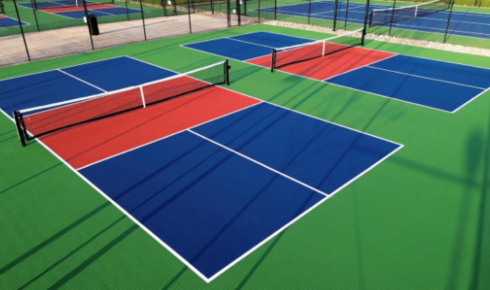
    Pickleball, a sport that has rapidly gained popularity across the world, demands a well-constructed and high-quality playing surface to ensure optimal performance and safety. As more players take up the game, the demand for superior pickleball court flooring has increased, making it essential to understand the right materials and construction techniques that go into creating a durable and professional-grade court. Whether for residential, recreational, or professional use, selecting the best pickleball court flooring material can significantly impact the overall gameplay experience.

    The foundation of any great pickleball court lies in its surface. Unlike traditional tennis or basketball courts, a pickleball court requires a flooring solution that balances grip, shock absorption, and ball bounce. The choice of materials is crucial in achieving these characteristics. Synthetic acrylic surfaces have emerged as one of the most popular choices due to their excellent durability, weather resistance, and ability to provide consistent playing conditions. A reputable pickleball court material manufacturer like SLT, a leading name in sports flooring, ensures that these surfaces are designed to withstand heavy usage while maintaining their quality over time.

    The process of pickleball court construction begins with a solid base, typically made of concrete or asphalt, to provide a stable foundation. Once the base is prepared, the chosen synthetic acrylic surface is applied, offering a seamless finish that enhances gameplay. The textured coating applied to the surface ensures that players have the right level of traction, reducing the risk of slips and falls. Additionally, these coatings can be customized with different colors and designs to meet the aesthetic preferences of players and facility owners. SLT specializes in high-quality acrylic surfaces that are engineered to provide optimal playing conditions for pickleball enthusiasts.

    A well-constructed pickleball court must also include proper line markings to define the playing area. These lines are typically painted with high-quality, UV-resistant paints to prevent fading over time. The surface texture should be carefully calibrated to ensure that the ball reacts appropriately upon impact, promoting a fair and competitive game. Professional installers work closely with pickleball court material manufacturers like SLT to ensure that every detail, from surface preparation to finishing touches, meets industry standards.

    One of the key advantages of synthetic acrylic pickleball court flooring material is its low maintenance requirements. Unlike traditional clay or grass courts, synthetic surfaces do not require frequent watering, rolling, or resurfacing. Regular cleaning and occasional touch-ups keep the court in top condition, making it an economical and long-lasting solution for both recreational and competitive play. Moreover, these surfaces are designed to withstand varying weather conditions, from extreme heat to heavy rainfall, without significant wear and tear. The longevity of synthetic acrylic surfaces makes them an excellent investment for individuals and institutions looking to create high-performance sports courts. SLT’s acrylic flooring solutions offer exceptional durability and weather resistance, making them a preferred choice for pickleball court installations.

    For facility owners and sports enthusiasts looking to invest in high-quality pickleball court flooring, partnering with a reliable pickleball court material manufacturer is essential. SLT provides not only top-tier acrylic flooring materials but also expert guidance on installation and maintenance. With advancements in sports flooring technology, modern pickleball courts now offer enhanced shock absorption and improved player comfort, reducing fatigue and the risk of injuries. Ensuring that the materials used meet safety and performance standards is key to creating an optimal playing environment.

    Another critical factor in pickleball court construction is ensuring proper drainage, especially for outdoor installations. A well-draining court prevents water accumulation, reducing downtime after rain and prolonging the lifespan of the flooring material. Additionally, incorporating cushioning layers beneath the surface can further enhance comfort and reduce impact on players’ joints, making the game more enjoyable for participants of all ages. When planning a pickleball court, it is also essential to consider the surroundings, including fencing, lighting, and spectator seating, to create a comprehensive sporting facility.

    The increasing popularity of pickleball has led to innovations in pickleball court flooring material, with manufacturers constantly developing new surface technologies that enhance playability and safety. However, for permanent courts, acrylic-based surfaces remain the gold standard, offering a balance of durability, traction, and aesthetics. Investing in quality flooring not only benefits the players but also enhances the overall value of the sports facility. SLT continues to be at the forefront of acrylic flooring solutions, providing top-quality surfaces that cater to both amateur and professional players.

    With a focus on superior craftsmanship, durability, and performance, SLT remains a trusted name in the industry for pickleball court construction. By choosing SLT’s acrylic flooring solutions, sports facilities and private court owners can ensure that they have a high-quality, long-lasting surface that enhances gameplay while requiring minimal maintenance. As pickleball continues to grow in popularity, investing in premium flooring solutions from a reputable manufacturer like SLT ensures that players enjoy a safe, high-performance environment for years to come.

  • How Incorrect Tennis Court Measurements Can Impact Gameplay

    How Incorrect Tennis Court Measurements Can Impact Gameplay

    Introduction

    Accurate tennis court measurements are crucial for ensuring fair play and optimal performance. Even minor errors in dimensions can impact gameplay, causing inconsistent ball bounce, incorrect line placements, and player positioning issues. Whether you’re constructing a backyard tennis court or a professional one, adhering to standard measurements is essential for a high-quality playing experience.

    Standard Tennis Court Dimensions

    A regulation tennis court has the following key measurements:

    • Singles court: 78 feet long x 27 feet wide
    • Doubles court: 78 feet long x 36 feet wide
    • Net height: 3 feet at the center, 3.5 feet at the posts
    • Service boxes: 21 feet from the net and divided in half

    Deviating from these dimensions can lead to multiple problems, affecting both casual and professional gameplay.

    Problems Caused by Incorrect Tennis Court Measurements

    1. Uneven Ball Bounce and Surface Inconsistencies

    If a tennis court is not built to standard tennis court dimensions, the ball may bounce inconsistently, making it difficult for players to predict its movement. This is especially problematic for competitive matches where precision is key.

    2. Poor Player Positioning and Footwork Issues

    Incorrectly marked tennis court measurements can cause players to misjudge distances, leading to awkward footwork and positioning errors. This can be especially challenging on an outdoor tennis court, where surface conditions already vary due to weather and temperature changes.

    3. Line Call Disputes and Unfair Play

    A slight misalignment in line markings can result in frequent disputes over whether the ball is in or out. This is particularly important for professional and tournament-level matches where accuracy is crucial.

    4. Impact on Court Resurfacing and Maintenance

    When a court is incorrectly measured, future tennis court resurfacing can become problematic. Contractors may struggle to match existing markings with new surfacing materials, leading to additional costs and errors.

    How to Ensure Accurate Tennis Court Measurements

    1. Work with Experienced Tennis Court Contractors Near Me

    Hiring professional tennis court builders near me ensures that your court meets official standards. Experts use precise measuring tools and methods to avoid inaccuracies.

    2. Verify Dimensions Before Finalizing Construction

    Before completing tennis court construction, double-check all measurements to ensure they align with official regulations. A small mistake in the early stages can lead to costly corrections later.

    3. Use High-Quality Tennis Court Surfacing Materials

    Proper surfacing materials like acrylic tennis court coatings ensure that the playing area remains uniform and well-marked over time.

    4. Regularly Inspect and Maintain the Court

    Routine inspections can help detect measurement inconsistencies caused by shifting ground or wear and tear. Periodic tennis court resurfacing can also help maintain accurate markings.

    Conclusion

    Incorrect tennis court measurements can negatively impact gameplay, player positioning, and overall match fairness. Whether you’re building a backyard tennis court or a professional outdoor tennis court, ensuring precise dimensions is critical. Working with experienced tennis court builders and investing in high-quality tennis court surfacing can help you avoid costly errors and maintain a top-tier playing experience.